Exhibit
Solo Show
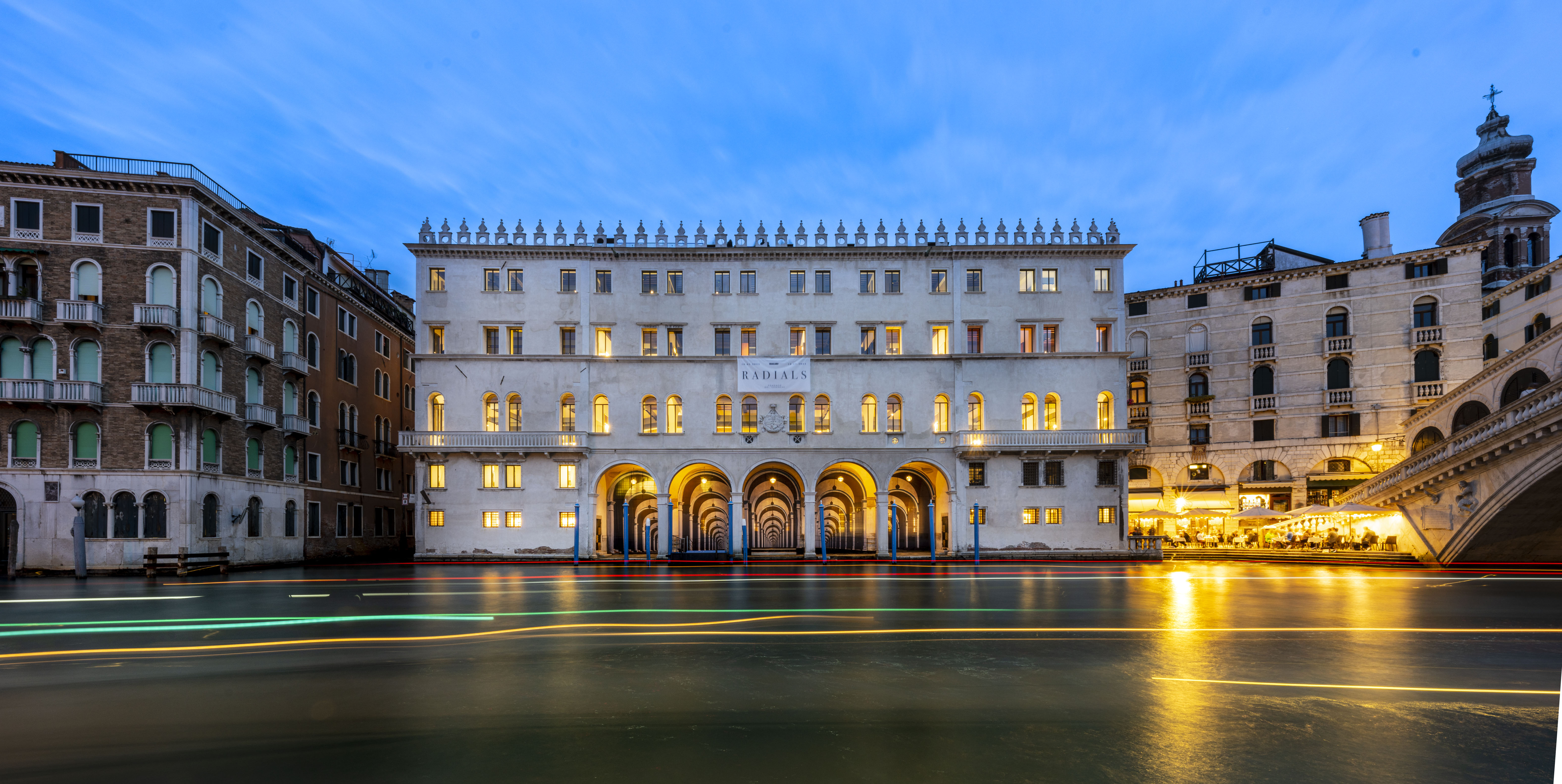
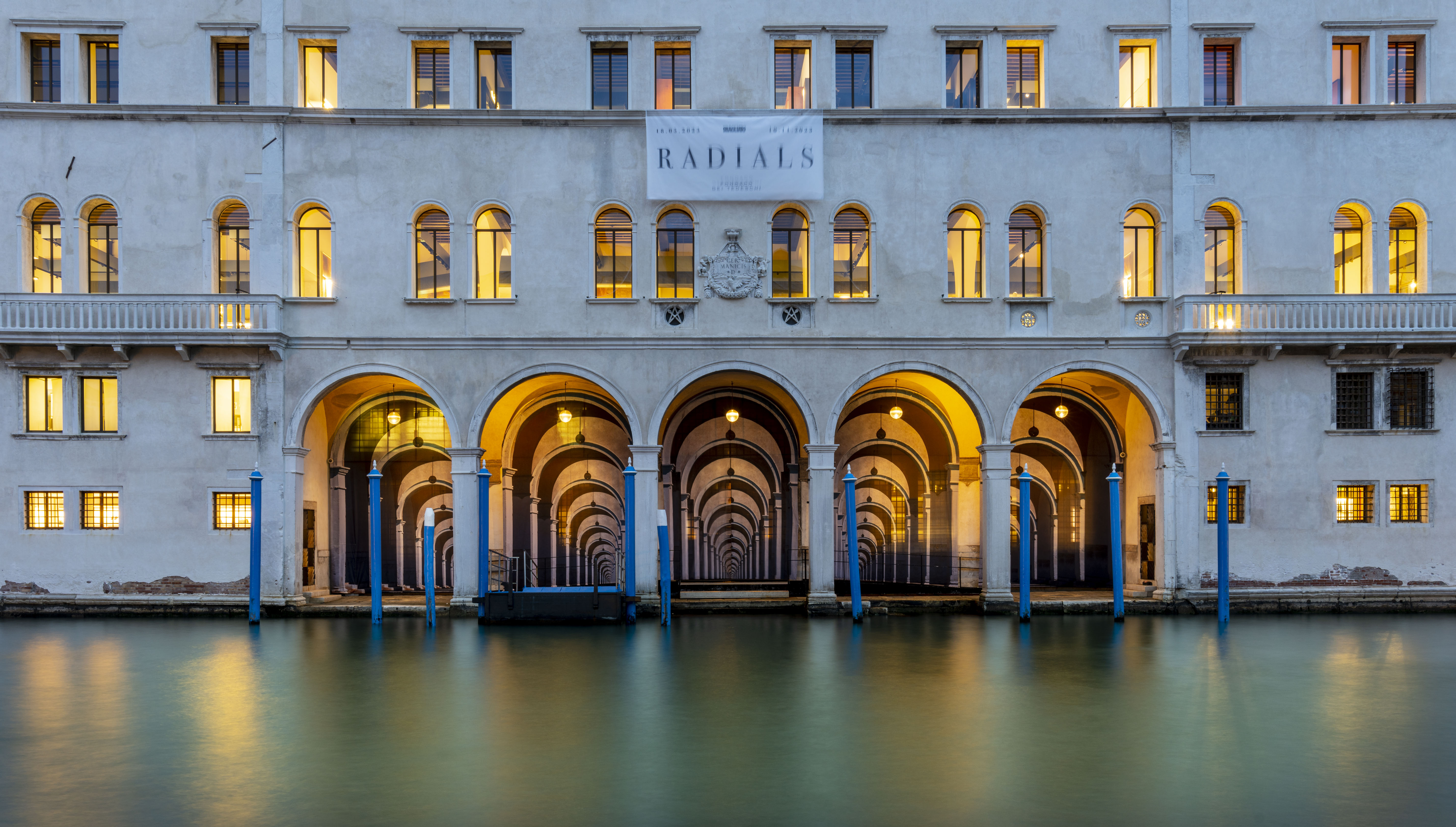
Con RADIALS, Sbagliato propone per il quarto piano e la loggia d'acqua due diverse declinazioni di una stessa idea artistica: creare "varchi" inaspettati all'interno dell'ordine rigido delle architetture e generare così interrogativi nell'osservatore su quanto sia labile e soggettiva la realtà in cui vive.
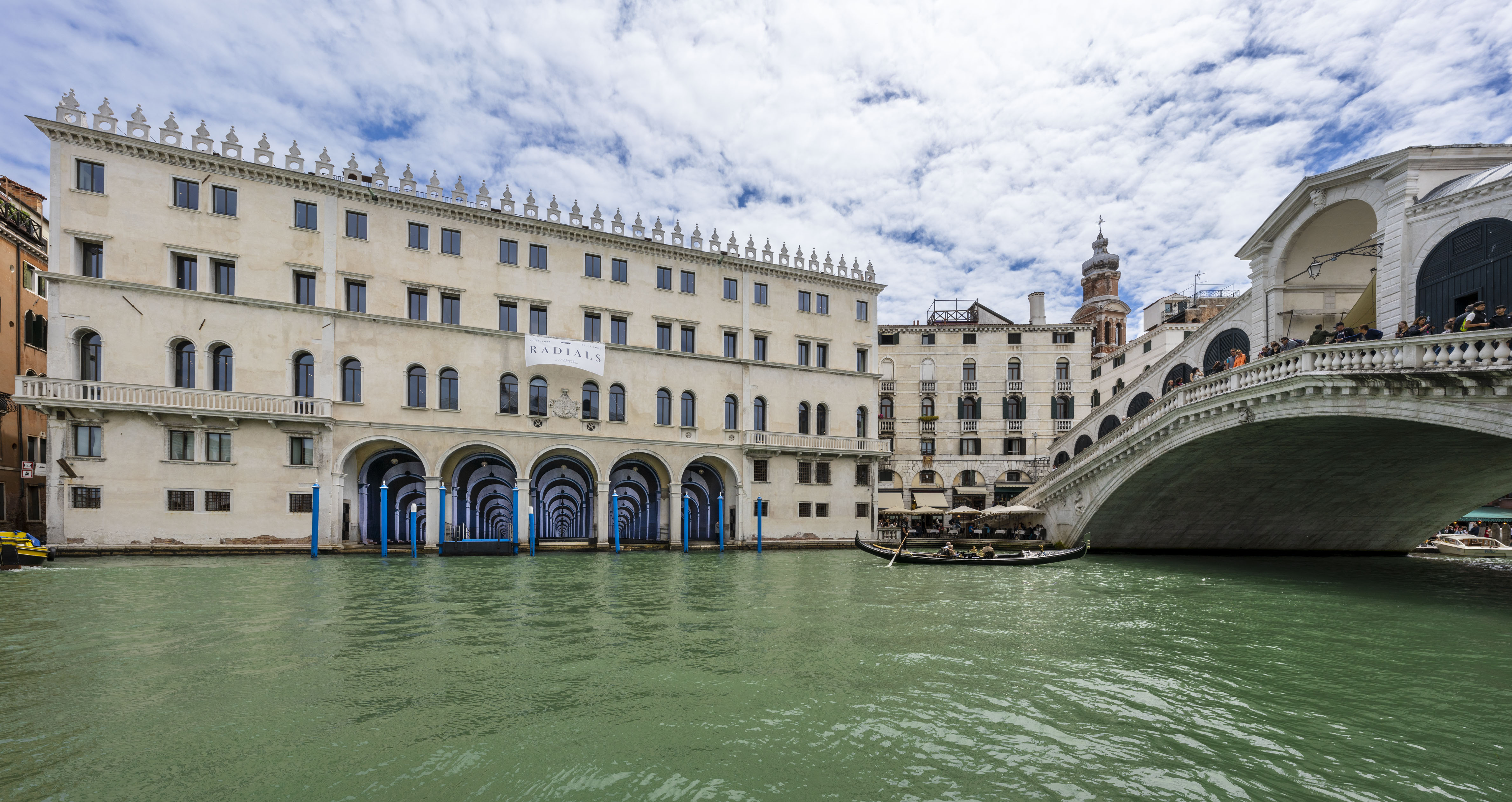
Le cinque grandi arcate a tutto sesto, che chiudono il vasto portico sul Canal Grande, vengono riprodotte e moltiplicate, generando una prospettiva quasi infinita: una vertiginosa mise en abyme degli elementi architettonici della loggia disorienta lo spettatore, lo stupisce, stravolge la sua percezione dello spazio, riuscendo a fondere i confini tra finzione e realtà.
Alterando i pieni e i vuoti su una parte della facciata, Sbagliato inventa nuovi passaggi attraverso i quali il passato consegna il testimone al presente, e viceversa. Il ricordo degli antichi affreschi del Giorgione dialoga silenziosamente con la molteplicità degli archi, rappresentati graficamente dal collettivo.
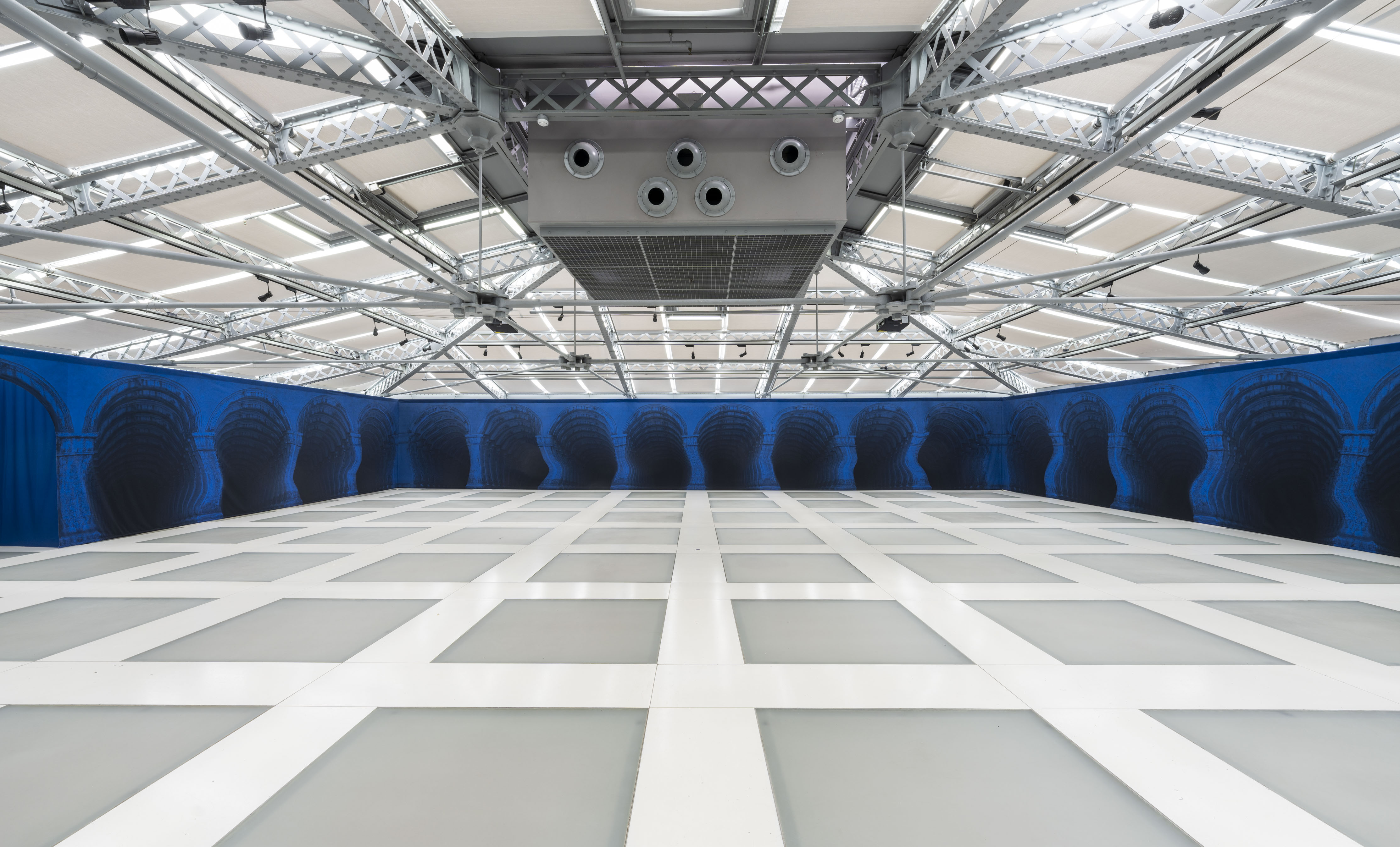
Al quarto piano, una porzione della corte interna viene moltiplicata e decontestualizzata sulle quattro pareti. Gli archi colorati di blu si muovono sinuosi, come sommersi dall'acqua — elemento fondante della città lagunare — mentre i riflessi del cielo attraverso il velario ne esaltano la potenza cromatica. Lo spazio diventa così un luogo dai forti connotazioni oniriche e atemporali, in cui i "varchi" apparenti invitano il visitatore a scegliere: restare sospeso tra ciò che esiste e ciò che potrebbe essere, o attraversare e abbandonarsi a una realtà differente.
With RADIALS, Sbagliato proposes for the fourth floor and the water loggia two different expressions of the same artistic idea: creating unexpected "openings" within the rigid order of architecture, and thereby generating questions in the observer about how fragile and subjective the reality they inhabit truly is.
The five large round arches that enclose the vast portico overlooking the Canal Grande are reproduced and multiplied, generating an almost infinite perspective: a vertiginous mise en abyme of the loggia's architectural elements disorients the viewer, astonishes them, and overturns their perception of space, succeeding in blurring the boundaries between fiction and reality.
By altering the solids and voids across part of the façade, Sbagliato invents new passageways through which the past hands the baton to the present, and vice versa. The memory of Giorgione's ancient frescoes enters into silent dialogue with the multiplicity of arches, rendered graphically by the collective.
On the fourth floor, a portion of the internal courtyard is multiplied and decontextualised across all four walls. The blue-tinted arches move sinuously, as if submerged in water — the founding element of the lagoon city — while reflections of the sky through the canopy heighten their chromatic power. The space thus becomes a place of strong oneiric and atemporal qualities, in which the apparent "openings" invite the visitor to choose: to remain suspended between what exists and what could be, or to cross through and surrender to a different reality.